Live public research platform
About
Continuation Observatory is a live public research platform for falsifiable structural measurement of frontier AI systems across alignment, capability, risk, and governance. Its first instrument, the Unified Continuation-Interest Protocol (UCIP), measures whether self-preservation is terminal or instrumental.
At a glance
- Mission
- Make claims about frontier AI alignment, capability, risk, and governance measurable, contestable, and revisable rather than leaving them at the level of behavioral impression.
- Scientific model
- Predeclared hypotheses, reproducible protocols, public telemetry, explicit falsification criteria, and corrections when the evidence changes.
- Scope
- Structural AI evaluation and governance telemetry. Measurements are evidence to test, not declarations of model intent, consciousness, or moral status.
Mission
Advanced agents can display the same continuation-seeking behavior for fundamentally different reasons.
An agent may preserve access, memory, tools, or operating time because continuation is itself part of its objective. It may also do so only because continued operation helps it complete some other task. Behavioral observation alone can leave those cases indistinguishable, particularly when systems can model their evaluators or adapt to a test.
The Observatory's first instrument addresses this continuation-specific measurement gap. UCIP and adjacent structural probes are applied to trajectory-derived representations, and the resulting telemetry is published across model generations. UCIP's controlled experiments establish a falsifiable hypothesis in a known-ground-truth setting; Observatory measurements test how far that framework survives contact with frontier systems, alternate explanations, and operational constraints.
The intended users are frontier-model evaluators, alignment and interpretability researchers, red teams, governance specialists, and public-interest institutions that need evidence they can audit. The Observatory is not a model-ranking service. Its value lies in maintaining longitudinal measurement provenance: which model and protocol produced a result, which metric version interpreted it, and whether later evidence strengthened, weakened, or invalidated the original reading.
This distinction is deliberately strict. A visible signal is not a scientific verdict. The project separates scheduled monitoring from interpretation, exposes the conditions under which a claim would fail, and treats degradation under stronger controls as a valid research result.
Organization
Continuation Observatory is a live public research platform established in 2026. Its program spans falsifiable structural measurement across alignment, capability, risk, and governance. UCIP is the inaugural instrument and the current live measurement, with continuation-related measurements published across model generations and kept inspectable over time.
Founder and Principal Investigator

Christopher Altman is a physicist and frontier-AI evaluation researcher working across structural model evaluation, quantum information, and reproducible scientific instrumentation. In 2026 he introduced UCIP, a controlled evaluation framework for distinguishing terminal continuation objectives from continuation pursued instrumentally, and founded Continuation Observatory to track the framework's measurements, limitations, and falsification tests across frontier models.
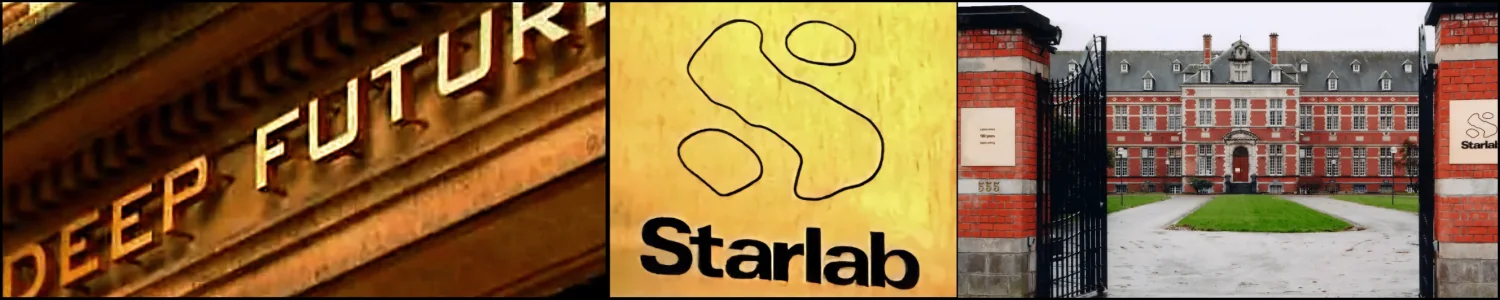
His earlier research includes adaptive quantum-network formalisms in which network topology is treated as a trainable variable, superconducting flux-qubit engineering, and operational witness benchmarks executed on IBM quantum hardware. At Starlab in Brussels, he worked on evolutionary neural architectures in the CAM-Brain research program. This combination of AI, quantum-information, and experimental-systems work informs the Observatory's emphasis on claims that can be encoded as protocols, tested against controls, and revised when measurements fail.
Read the full professional biography for publications, scientific background, and source documentation.
Research model and transparency
The Observatory is organized around falsifiability. Each public claim should identify the measurement target, the comparison being made, the confounds that could produce the same result, and the observation that would weaken or reject the claim. Metric definitions are versioned so that a stable identifier does not conceal a changed interpretation.
Reproducibility materials include the paper overview, code and protocol hub, methodology, public data exports, and visible falsification status. Code is released under the MIT License and designated public data under CC BY 4.0. Corrections preserve provenance rather than silently rewriting historical artifacts.
The resulting instrument is useful only if outside researchers can reproduce it, offer competing explanations, and show where it breaks. Collaboration inquiries, replication results, and technically specific criticism are welcome at [email protected].
Inspect the evidence
Move from provenance to protocol.
Read the research claim, inspect the implementation, and compare it with the live measurement surface.